
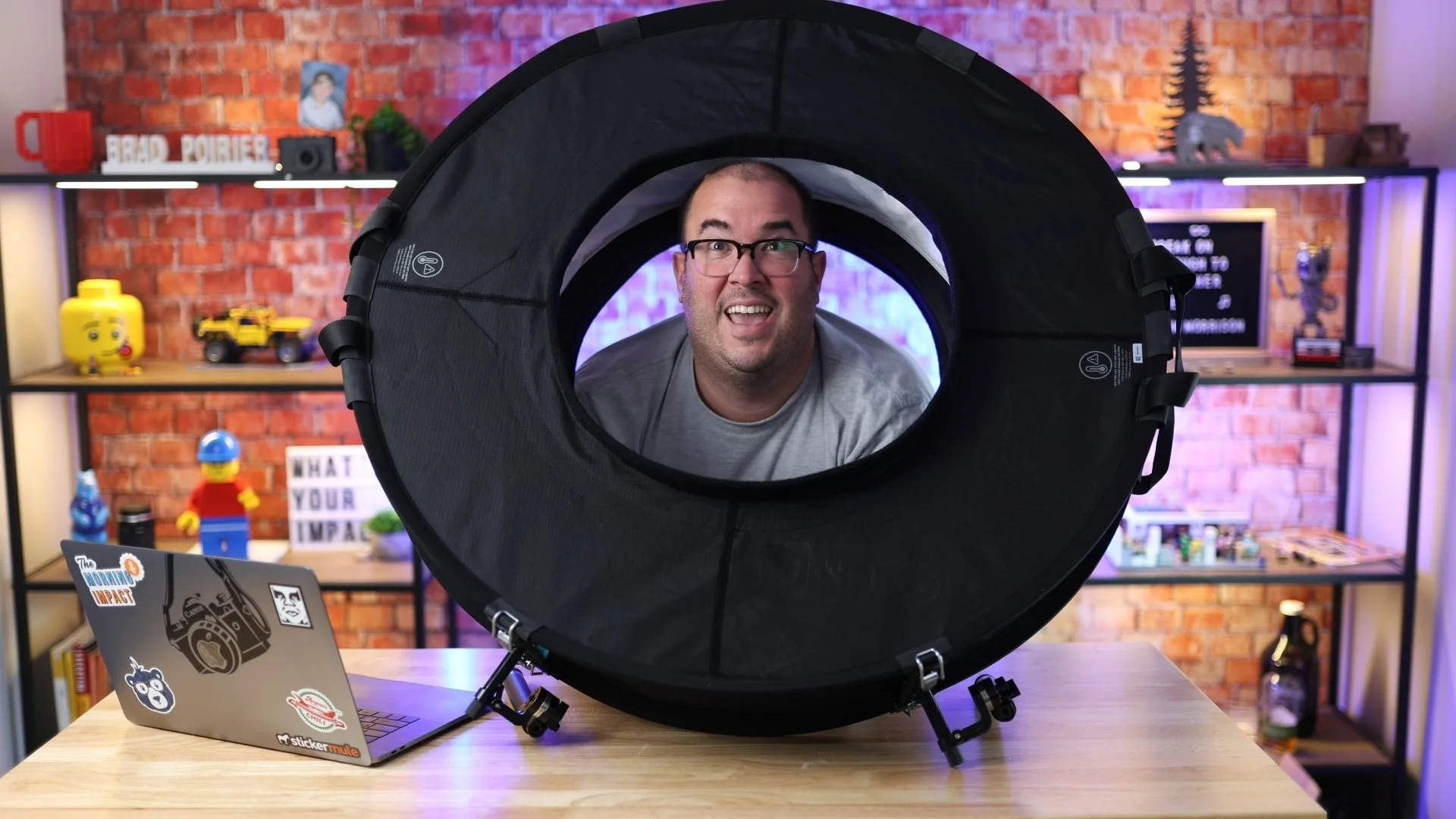
Lighting Made Easy with the Halumin H18 Open Cylindrical Modifier
Are you tired of spending endless hours setting up lighting systems for your product photography? Look no further! The Halumin H18 open cylindrical modified is here to save the day. In this article, we will explore the features and benefits of this innovative lighting solution, as well as share some tips and tricks for getting the most out of it.
Are you tired of spending endless hours setting up lighting systems for your product photography? Look no further! The Halumin H18 open cylindrical modified is here to save the day. In this article, we will explore the features and benefits of this innovative lighting solution, as well as share some tips and tricks for getting the most out of it.
Introducing the Halumin H18: A Game-Changer in Lighting Modification
The Halumin H18 is part of a new category called Open Cylindrical Lighting (OCL). Designed by Jeremy McGraw, a seasoned product photographer, this modified was born out of a desire for a quicker and more efficient way to set up lighting systems. With the H18, you can achieve professional results in minutes, thanks to its unique design and functionality.
How Does It Work?
The H18 features a 360-degree open ring with an 18-inch staging area. Simply place your product inside the circle, and you're ready to start shooting. The modifier can accommodate one or two speed lights, which you can attach using the openings and strap provided. If you prefer, you can also use a studio light adapter with a standard Bowens mount to connect a studio strobe or COB video light.
Endless Possibilities and Versatility
One of the standout features of the Halumin H18 is its versatility. Depending on where you position your subject within the ring, you can achieve different lighting effects. Placing your subject near the back of the ring creates a traditional lighting setup. In the middle, you'll get a soft but defined edge effect, while positioning it at the front produces a backlit look. This flexibility allows for creative experimentation and ensures you can capture the perfect shot for your specific needs.
Convenience and Quick Set-Up
With the H18, efficiency is key. Setting up the modified may initially seem intimidating, but fear not! Halumin provides tutorial videos on their YouTube page to guide you through the process. Additionally, the modified can be easily collapsed and stored, making it a breeze to transport and set up at any location. Say goodbye to time-consuming setups and hello to hassle-free shooting!
Additional Accessories for Added Convenience
To further enhance your shooting experience, consider adding the leg adapters to your H18 setup. These little helpers allow hands-free shooting and give you the freedom to explore various angles and compositions. The leg adapters can be purchased separately or as part of a package with the studio light adapter.
A Word About Lens Rentals
If you're in need of equipment rentals, look no further than lensrentals.com. With their unique rental shipping option, you can enjoy unlimited free shipping on all orders. This convenient service ensures your gear arrives when you need it, allowing you to focus on capturing the perfect shot. Plus, lensrentals.com offers an extensive range of equipment, including drones, for all your photography needs.
Get $25 off your first rental by signing up at bearcityimpact.com/lensrentals
Final Thoughts
The Halumin H18 open cylindrical modified is a game-changer in the world of product photography. Its innovative design, quick set-up, and versatility make it a must-have for any photographer looking to streamline their workflow and achieve stunning results. So why wait? Grab yourself a H18 and take your product photography to the next level!
Ready to shine a light on your products? Visit haluminphoto.com to learn more about the Halumin H18 and lensrentals.com for all your equipment rental needs. Happy shooting!
***Disclaimer: This blog post is not meant to endorse or promote any particular brand or product. The information provided is based on the speaker's personal experience and opinions. Always do your own research and choose products and services that best suit your needs.

How to Use Video to Tell Your Brand's Story
Are you tired of feeling like your brand is just a small fish in a big sea? Are you ready to stand out and make a splash? One way to do just that is by using video to tell your brand's story.
Are you tired of feeling like your brand is just a small fish in a big sea? Are you ready to stand out and make a splash? One way to do just that is by using video to tell your brand's story.
Video is a powerful medium that allows you to showcase your brand's personality, values, and unique selling points in a way that text and images simply can't. When done right, it can be an incredibly effective marketing tool that helps you connect with your audience and differentiate yourself from the competition.
So, how do you use video to tell your brand's story effectively? Let's dive in.

Crafting Your Message
Before you even think about picking up a camera, it's important to have a clear idea of what you want to say. This means taking some time to think about your brand's message and how you want to communicate it to your audience.
Here are a few things to consider:
Who is your target audience? What do they care about?
What makes your brand unique? What sets you apart from the competition?
What are your brand's values and mission?
What do you want your audience to feel, think, or do after watching your video?
Once you have a handle on these things, you can start thinking about the specific story you want to tell. Some ideas to get you started:
A "day in the life" style video that gives a behind-the-scenes look at your business
A customer testimonial video highlighting the positive impact your product or service has had on someone's life
A "how-to" video that educates your audience on a specific topic related to your business
An animated explainer video that breaks down a complex concept in a simple and visual way
Need help creating a video script? Use our free video script template. Just fill in the blanks!
Finding the Right Style
Now that you have a rough idea of what you want to say, it's time to think about how you want to say it. The style of your video should be in line with your brand's personality and aesthetic, as well as your target audience.
Some things to consider when choosing the style of your video:
Do you want to use live action footage or animation?
What kind of tone do you want to strike? Serious, funny, informative, etc.
How long do you want your video to be? Short and snappy, or longer and more in-depth?
It's also a good idea to look at examples of other brand videos that you admire and see what elements you can borrow and make your own.
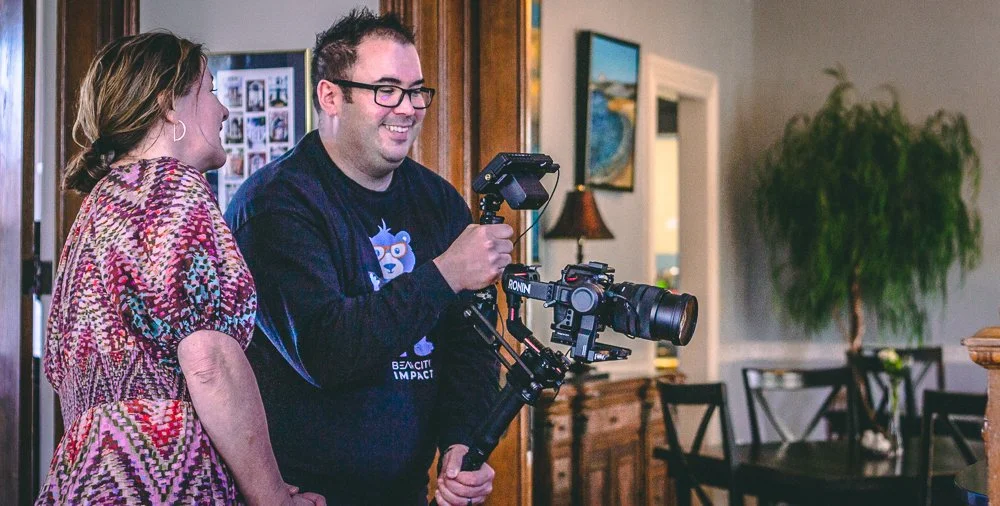
Visual Storytelling
Visual storytelling is an integral part of creating an effective brand video. After all, people are much more likely to remember what they see than what they hear.
Here are a few tips for using visual elements to tell your brand's story:
Use strong, striking imagery to grab your audience's attention
Use shots and angles that add emotion and depth to your story
Use graphics and animations to illustrate complex concepts and ideas
Use music and sound design to set the mood and enhance the emotional impact of your video
Putting It All Together
Now that you have your message, style, and visual elements figured out, it's time to bring it all together and create your video.
Here are a few things to keep in mind as you start production:
Work with a video production company that understands your vision and can bring it to life
Keep your target audience in mind and make sure the video speaks to them
Don't be afraid to get creative and try new things
Stay true to your brand's personality and values
Keep it concise and to the point. Most people have short attention spans, so it's important to get your message across quickly and effectively
Use call-to-actions to encourage your audience to take the next step, whether that's visiting your website, signing up for your newsletter, or making a purchase
Promoting Your Video
Creating a killer brand video is just the first step. In order to truly make an impact, you need to get it in front of the right people. Here are a few ways to promote your video:
Share it on social media platforms like Facebook, Instagram, and Twitter
Embed it on your website and blog
Include it in your email marketing campaigns
Share it with industry publications and websites
Collaborate with influencers and have them share your video with their followers

Measuring Success
The final step in using video to effectively tell your brand's story is to track and measure the results. This will help you see what's working and what's not, and make any necessary adjustments for future videos.
Here are a few metrics to keep an eye on:
View count: How many people have watched your video?
Engagement: How many people have liked, commented, or shared your video?
Conversion rate: How many people have taken a desired action (such as visiting your website or making a purchase) after watching your video?
Audience retention: How long are people watching your video for? Are they dropping off after a certain point?
By regularly tracking and analyzing these metrics, you can get a better understanding of what resonates with your audience and how to create even more effective brand videos in the future.
Using video to tell your brand's story can be an incredibly effective way to connect with your audience, showcase your unique selling points, and differentiate yourself from the competition. By crafting a clear message, finding the right style, using visual storytelling techniques, and promoting your video effectively, you can create a video that helps you stand out and make a lasting impression.

5 Marketing Strategies for Local Service Providers
Every local business owner has the same concern; how do I get customers? It is a common problem because with no customers you have no income. Below I want to highlight 5 marketing strategies that local service providers should consider implementing.
Every local business owner has the same concern – how do I get customers?
It is a common problem because with no customers you have no income.
Revenue = barbeque on the patio. Less revenue = less barbeque. You know where this is going...
Below I want to highlight 5 marketing strategies that local service providers should consider implementing.
1. Provide a service people need.
The first step to success is making sure your product or service is a necessity. When someone needs something, they will be more likely to pay for it.
If you provide a service that people can't live without and have no other way of obtaining, then you'll have a better chance at building a successful business.
In addition to providing a useful service, it's also important that the service be valuable in some way. People need many different things throughout their lives: from laundry services and pest control solutions to plumbing repairs or real estate consultation services.
There are plenty of opportunities out there if you're willing to put in some hard work and creativity!
2. Establish a target market
Before you can start marketing, you need to know who your target market is. This will help shape the types of marketing strategies you use as well as how much effort and money is spent on each strategy.
Start by determining who your customers are. Are they single mothers in their 20s? People between the ages of 35-45? Business owners? Seniors? Once you know this, consider what services they need and how often they need those services (for example: once a month or every six months). That’s when it gets tricky: You have to figure out who your competitors are!
Competitors include other local businesses providing similar products and services, but also people within the same community offering complementary products/services or even other industries that might cross over into yours (such as restaurants serving food). Don’t forget about online options too—your competition could come from anywhere!
3. Create a professional website and online identity.
It's not enough to be on the web. Your website design needs to be professional, and it should reflect your brand.
In a few steps, you can turn your website into an online identity that will help customers find you easily and build trust in your company:
Use a professional email address – like name@companywebsite.com.
Use a professional phone number.
This could be your business line or a dedicated cell phone number for marketing purposes only. Make sure this is listed on the site so that customers can call if they have questions or concerns about service before they schedule an appointment.
Make sure there is consistent messaging across all of your channels.
It should be clear what they can expect when they interact with you online or in person through communications like social media posts, blog articles or newsletters.
4. Build a reputation.
The next step to building a thriving business is to establish your reputation. Your customers need to know they can trust you, and that's why it's important to give them reasons why they should both love you and keep coming back. There are many ways you can do this:
Quality: Make sure your work is always done right the first time around.
If there are any problems with a job, fix them immediately so that no customer will have cause for complaint.
Reliability: If someone needs something taken care of by a certain date or time, make sure it gets done on schedule
And if there are any delays along the way (e.g., weather or other factors), let your client know immediately rather than leaving him hanging in suspense while waiting around for his lawn service guy who might never show up at all!
This helps build credibility by proving how reliable and trustworthy you truly are as an individual or business owner/operator—which in turn will attract more potential clients over time (and probably make current ones happier too!).
5. Get involved in the community and local organizations.
In order to be successful in any local business, you have to be a part of the community. Just like a person cannot run for public office without first establishing their credibility within their district and earning the trust of voters, a service provider must also establish themselves as being committed to helping out in some way before they can expect people to consider buying from or referring them.
The best way for local service providers to do this is by getting involved in events that have nothing whatsoever with marketing or sales.
A great place for this would be volunteering at local schools; many teachers are short-staffed and could use help on field trips or at school functions outside of class time.
Another option would be joining one of your city's business associations, such as a chamber of commerce.
This gives you the opportunity meet other professionals who work in similar industries and learn about upcoming opportunities such as grant programs or tax breaks that may benefit your business (but which won't usually come up during general conversations).
These marketing strategies can help bring new customers to your local business
When you're starting out, it can be hard to find new customers. The good news is that there are a few things you can do to help bring them in.
Identify your target market. You need to understand who will be interested in what you provide, and why they'd want it. If you're selling hot dogs on a street corner for $0.50 each, then everyone should have hot dogs! But if you're selling luxury cars for thousands of dollars each, then maybe only wealthy people will buy from you.
Provide a service that people need (or think they need). If no one needs your product or service enough for them to pay for it, then no matter how many ads or marketing campaigns or promotional events (like parties) you throw at them—they won't care about coming over!
Create a website that is professional and has a clear message
Build your reputation, be known for quality work and being reliable
Get involved in your community
Conclusion
When it comes to marketing your local service business, the key is to be flexible and creative. You’ll need a solid marketing strategy in place before you can implement any specific tactics.
If you want to find new customers, then it's important that your company finds ways to connect with them by partnering with the right marketing agency.

Working The Nerve To Make A Video
If you have considered making a video with yourself on the camera, but you're deathly afraid to hit record – then let's jump in. Here are a few very quick pointers to getting over that camera fear (or not)
This video that you're watching right now is what we call a talking head, because it's you see my head and it's talking.
This is called a talking head video. So when people are coming to me for help. They usually say something like: “I know I need to make more videos, but I'm really uncomfortable on video.”
The first thing I would say to that is if you're really uncomfortable, then just don't do it.
There are plenty of people that run great accounts and have great websites, great social media and don't make any talking head videos.
So don't do something that's going make you suffer. First of all, that's the first thing.
The second thing is if you are not sure if you're uncomfortable because you just really haven't given a good go.
Here's what I would do to create a talking head videos. I would just use Instagram Stories because the only last for twenty four hours,
I find that people will explore a little more of that because it just can last for twenty four hours or you can just delete it.
You have to kind of start there because it's just like a quick, a little 15 second talking head that you can kind of make and then just kind of work your way up from there.
The other reason you're doing that with stories is you're getting used to seeing yourself on camera and hearing yourself on camera is really weird.
When you hear yourself back after you've recorded yourself, your voice doesn't sound anything like it. And so it's kind of weird. It's always weird when I edit my own video because I'm listening to myself – but I don't really care.
And the reason why is: I don't do it for me, I do it for you, and so I do it to educate an audience, entertain an audience, and then they hopefully make a new customer.
But at the end of the day, I'm not doing it for me. I'm doing it for someone else. So that's what I would say.
So consider why you're doing it. You know, are you doing a talking head video because you see other people doing it and you think you have to do it or because you really believe, like, oh, I can get over a little bit of awkwardness and if I can just get over that little awkwardness, then I can maybe help someone with whatever specialty knowledge that I have.
So if that's the case, then I would say start with stories, work away from there and then just keep going.
Keep hustling.

How To Market A Catering Company
In this first episode of Coffee & Content, we discuss viewer questions on how to market a catering business and whether you should start a podcast.
How To MarketBelow is the original LIVE Video from Instagram, but you can scroll past for the written notes.
Instagram Authenticity Measures
STOP using bots, automated crap, automated messages.
Instagram and more importantly USERS hate that stuff
Consumed or Created?
Par-baked version of TikTok
Clunky to create
I see more people just copying a TikTok video over to Reels
Podcast Stats for 2020
Why start a podcast today?
1. Of the 1Mill podcasts on iTunes, only 250K have been updated in past 3 months!
2. Interview guests, and increase the exposure
3. Can create additional content from it
Lead Conversion Stats from Convince & Convert
41% say video is more effective at CONVERTING
36% webinars, 34% blog, 20% ebooks
Dollars are shifting to social media and website improvement
54% social, 51% website, 44% email, 40% content A Catering Company

Best Wireless Mic System For Videos in 2020
Today I’m going to review the brand new Comica BoomX-D Wireless Microphone System. Overall I think this is a fantastic microphone for making videos at any level.
BOOM !
Today I’m going to review the brand new Comica BoomX-D Wireless Microphone System.
Overall I think this is a fantastic microphone for making videos at any level.
My name is Brad Poirier, and I am a content strategist and my company Bear City Impact creates content for small businesses. If you’re looking to create content that converts, then consider subscribing so I can help you give your content a kick in the butt.
Now there are few different versions of the BoomX-D. The model I’m reviewing today is the D2, that comes with two microphone and one receiver. Thank you to Comica for sending me this microphone by the way, but this is my genuine opinion of it.
They also make a model with just one microphone and one receiver, in addition the offer models where the receiver plugs directly into an iphone or android phone.
You can still use the D2 model that I have, you just might need an adapter if your phone does not have a headphone port.
I’ve left all of the model options in the description below, obviously.
Just a quick note, this is a practical review of this product. Meaning, I’m not getting into any technical details. I think they’re boring and at least for the clients that I serve - most of them won’t tell the difference between a better frequency response or some other “spec”.
Let’s look quickly at what you receive in this box:
Two microphones (transmitters)
One receiver
3 audio cables for the receiver, based on what you’re plugging in to
USB-C Charging cable
Two lavalier mic
Two fuzzy wind jammers
Reset pin
Plus a manual, which candidly you don’t even need because this is so simple to set up and use right out of the box!
One of my favorite features of this system is how small, compact, and lightweight it is. Plus the transmitters have an integrated microphone. So you can use it as a clip on mic, or plug in the included wired lav if you prefer.
Conveniently, the belt clips on all models double as camera mount. You can slide the belt clip right into your camera’s hot shoe.
Or if using your smartphone, you can just clip it to the phone itself. Perfect!
Both the receivers and transmitter have a built-in rechargeable battery, although I have not tested how long it lasts. It is rated for five hours though. I do appreciate not having to change out batteries though.
The receiver has two outputs. One for your camera or smartphone, and another if you want to monitor the audio through a pair of headphones.
This is especially useful for connecting to smartphones, so that you can make level adjustments.
You don’t want to just hit record and then find out later the volume was too low or too high.
Connecting the receiver and transmitter couldn’t be easier. Comica uses their own 2.4Ghz network, so you don’t have to worry about connecting via bluetooth or wifi etc.
You practically just turn them both on, click the pair button, and then it finds the receiver!
Once they are connected, you can adjust the input levels from the receiver.
So if you have a person that talks a bit louder (like me), you can reduce the amount of gain from 0db to 12db, 12db being the most amount of gain.
Another reason to raise the gain level is if you are using a Canon camera like I am. If you leave the canon’s mic level high, you’ll get a lot of fuzz noise in the background. I set the mic level at about 25% on my Canon DSLR, and then raise the gain level on the Comica microphone, which produces a much better, noticeable sound difference.
If I had to pick my favorite features for this microphone set, it would be:
how easy it is to just take out of the box and start using it
You can use the built in mic or plug in the wired lav
Compact form factor
Built in battery
Clips on anywhere
Now this unit as reviewed currently sells for $233, but you can get the single mic option for $166.
In both cases, that’s a fantastic value for any wireless microphone, let alone one that packs so much in a small punch.
What are you currently using for a microphone to make videos? Are you using the built in mic from your phone or camera? Let me know in the comments.
Btw, did you find this review to be more helpful than techy? If so, consider subscribing - I speak human to human, or at least I try!
Cheers.

How To Develop A Content Strategy
Marketing is so important when it comes to building a successful company; the world of business is incredibly cut throat, so no matter what you do or sell, you will be up against competitors.
Marketing is so important when it comes to building a successful company; the world of business is incredibly cut throat, so no matter what you do or sell, you will be up against competitors. Clever marketing in general gets your name out there to the right customers, and shows them why they should choose your business over other, similar companies. But it’s not easy to do this, a good marketing strategy should be multifaceted and utilise lots of different methods to sell your project. Content marketing is one element of this, which is complex within itself.
What is a content strategy and why do you need one?
Creating great content is one of the best ways to reach out to prospects and generate leads, and content strategy is the planning, development and management of content. This not only includes the words on the page, but also images and multimedia such as infographics, videos and more. The goal of content strategy is to create meaningful, cohesive, engaging, and sustainable content that people genuinely find useful and want to share. This helps your content to snowball and in some cases, even go viral. Some of the principles to remember when it comes to content marketing include:
Create quality content to attract customers, engage and build trust.
Don’t be tempted to produce low quality work because it’s quick and easy, tactics like keyword stuffing are banned and easily picked up by Google- this will hinder your progress rather than help. Cheap article writing gigs can be found on any freelancing site these days, but always choose quality over quantity. Either hire writers yourself, or work with freelancers with a proven reputation, who can create the high quality content you need.
Quality content avoids blockers
Research shows that ad blocking software is used by around 30% of Internet users, meaning a third of people will never see the paid advertising messages that are targeted to them. It goes to show the way we need to market our businesses is evolving, no longer is a flashing banner on the screen enough to grab an audience’s attention or sell a product. We have to be smarter- and good quality and valuable content is one example of this. It’s not simply an ad or an annoyance, content marketing provides value to the reader and promotes a product in a way that isn’t pushy or forceful.
Pleases search engines as well as the user
To be successful in marketing, you need to please the user (your audience) as well as search engines. Users will expect high quality content that’s informative, and perhaps even humorous and witty. Search engines algorithms use things like proper backlinks and correct keywords to rank your content. By producing high quality content you can appeal to your user as well as rank highly within search engines.
Getting to know your customers
In order to solve your customers problems through your marketing strategy, you firstly need to fully understand them. Modern marketing now relies less on traditional market research methods such as surveys or focus groups, and pays close attention to things like smart online platforms and tools that tell them everything about their customers’ demographics, online behaviors, and conversations. When you understand how users think and speak about a subject it puts you in a powerful position to tailor content towards them. Some of the ways you can go about this are by:
Developing personas
Buyer personas are semi-fictional representations of your customer, based on market research and real data that you have about your users. This involves gathering insight from different platforms such as website analytics, social media channels, customer reviews as well as actual conversations with prospects and customers. They help you better understand and get closer to customers, as real humans as you understand who your buyer is. Personas help us to understand what customers need, where and when they need it, how you can help and what solutions you can offer to their problems. They can also give you an idea about location (are they local or global customers?) their age (certain age groups respond better to certain marketing methods) and even if they’re likely to be married with a family. All of these things can play into the way you target your content.
Analysing the market and your competitors
If you want to succeed in business, you need to have expert knowledge into what’s happening in your market which includes how your competitors are doing. It’s important to know what’s working for them and what’s not so you can either emulate their successes or avoid their mistakes. Keep your ears and eyes open for what’s happening in your industry which helps you to identify gaps in the market such as needs that aren’t being fulfilled, common frustrations, or trends. It’s crucial that you stay up-to-date and and remain factual based on what’s going on in the world to avoid putting out outdated information. When new information becomes available, update your content or archive it.
Determine marketing strategy objectives
Objectives specific measurable outcomes that will be achieved within a particular time frame and they help individuals evaluate the success and effectiveness of a particular marketing strategy. They aid marketers to align expectations and plans, coordinate efforts, and hold teams accountable for achieving results
Types of content marketing and their effectiveness
There are a number of methods of content marketing you can utilise, but there’s no ‘one size fits all’. It will all depend on your business and your audience, and finding the best methods can often be trial and error. Here are some of the things you could consider incorporating into your content strategy, and why they could be effective for you.
Blog Posts
Blogging allows you to constantly refresh the content on your site, which search engines value. It establishes authority in your given area and builds trust, and a stream of new and fresh regular content gives your audience a reason to visit your site and keep coming back. Blogging is an opportunity to offer more value to your readers and enables you to promote what you do without simply spamming links to products on your social media. For this reason, research shows that you'll generate 3x more leads via blogs than through ads and it’s the perfect opportunity for SEO too, which is why it provides 4x the likelihood of being found in organic search (source). As well as publishing content on your own blog, incorporate guest blogging into your strategy as this can be incredibly beneficial. If you work with bloggers who are well established, the backlink will improve your own domain authority and the content will be seen by the bloggers own network which can help you to expand your own.
Infographics
Infographics are a mix of design, writing and analysis- they are ideal for an age of big data and when users are wanting fast, snappy and relevant information. People love facts, figures and statistics but in a bite size and easy to understand format which makes infographics perfect. They’re easy to scan, view and process and as a result, they’re more likely to go viral than other forms of content. They show an expert understanding of a subject but without having to go into as much depth as you would with typical written content.
Videos
Video is an incredibly important part of your content strategy and is something that most businesses will need to utilise. No longer just one piece of your overall marketing plan, it’s central to your outreach and campaign efforts, particularly your social strategy. Video has absolutely dominated society. According to a research, four of the top six channels on which global consumers watch video are social channels (source). From entertainment to ads, to landing page videos and how-to tutorials for your products, there are plenty of ways this can, and should, be incorporated into your content strategy.
Ebooks
The popularity and perceived value of eBooks has made them a favourite of online marketers; instead of feeling like yet another blog post or video, a downloadable eBook feels far more like a real object of value. Writing an eBook also gives you the ability to showcase your authority on a subject in greater level of depth than a blog post allows. One of the main things that people look for when buying from a brand (especially when buying from them for the first time) is that they’re reliable and genuine, and an eBook can certainly help you to gain that authority. However, eBooks aren’t for every business and audience, so it’s important to know if this is the right direction for you to go in. This is because writing an eBook takes time, you don’t want it to be wasted if it’s simply not a good fit for your audience.
Podcasts
There has been a rise in audio content, it is becoming more and more popular over time. While it’s unlikely to ever overtake video, it’s still an excellent medium to advertise in some cases. It provides an opportunity to engage people- but only if this suits your type of product and audience. One thing to be aware of is the research- it shows that listeners of podcasts tend to be more educated and have a higher income. If your research on personas shows that your audience is likely to be a good fit then this is something you could try. The downsides to using podcasts as a content marketing method are that metrics can be difficult to measure (since you can see downloads but not engagement) and you need to have lots of information to make them work. As with anything you’ll want to be consistent, and consistently releasing podcasts will require a lot of time, effort and information. However, if they’re right for your business they could be an excellent way to engage your audience.
Social Media
Social media is a powerful tool to engage your audience and turn them into leads or buyers. The key to good social media marketing is to use your platform as a way to be social, and not go for the hard sell. It’s best for building up trust and brand awareness, as research shows it doesn't tend to be people’s favourite platform for buying. 2 billion people per month use social media yet conversion rates remain low which is interesting. This being said, it’s a highly important part of your content strategy as building up a following is one of the most valuable things you can do for your business. Use your platform to engage, find out information about your audience that you can then use to target your content. Share blog posts which in turn will hopefully be shared by your followers.
Publishing schedule
It’s content which fuels online marketing- but if you don’t have a content strategy, you will struggle to generate leads. An effective content strategy requires a well planned editorial calendar which is a schedule of content to be produced and delivered to your prospects through different channels. This includes your blog, social media channels, email newsletters and more, all over a specified timeline. As a brand, it’s important to be consistent, your audience will expect this of you and it also helps you to look more reliable and trustworthy. Following style guides for things like language and design helps people understand and learn what you are trying to communicate, and doing so on a consistent schedule lets them know what to expect. Here’s how you can go about it;
List the content that should be published based on your content strategy.
This can include everything from yet-to-be developed content to existing content, or content that will be repurposed for your audience. Certain pieces of content you already have can easily be changed up and republished, allowing you to get the most out of it while keeping to your schedule. For example, seasonal content can often be repurposed each year with a few tweaks.
Content creation and publishing dates
This includes when the content should be created and when it will be published. It can be useful to use an editorial calendar to ensure the right content is being delivered in a timely manner without the hassle of manually going through everything.
A list of channels for delivering your content
You might for example want to deliver part of an eBook and then distribute other relevant content through social networking sites, newsletters and other channels. Think about the way your audience uses their platforms and how best to grab their attention.
As you can see, developing a content strategy is no mean feat; it’s incredibly complex with lots of room for error if you don’t know what you’re doing. Working with an expert or marketing agency can save you time, effort, stress and money. It’s not something you can just guess at.

The Best LIVE Stream Software for Mac OSX
This is the 2nd app of three that I use DAILY, although this one I use about every other day. In this video I breakdown 5 ways that I use this program and show some examples.
Get a Free trial of Ecamm here:
https://bit.ly/ecamm-trial
This is the 2nd app of three that I use DAILY, although this one I use about every other day. In this video I breakdown 5 ways that I use this program and show some examples.
Here it is in case it is TL;DW:
1) Scheduling Live Streams - Each week I schedule the live stream for The Morning Impact by using Ecamm Network. This way, it gets posted to Facebook as a preview post, alerting my audience of the new episode, and also alerts my guest so that they can start a watch party!
2) Broadcast Studio - Hands down this is the way to live stream if you have more than yourself on camera. Ecamm let's me hook up multiple camera sources, and then my buddy Dave is on the switcher changing the cameras based on who is talking - JUST LIKE IN A REAL TV STUDIO! This stops the boring one camera angle. Also, I can add in things like titles, overlays, and logos.
3) DSLR Recorder - I record directly from my camera to Ecamm when doing talking head videos, like this one you are watching. This is because Canon is a memory hog when it comes to 4K recording. For reference, for the same 7 minutes of footage, my Canon will store it as 25GB whereas Ecamm records it at 800MB... I dont know about you, but I don't notice the compression when watching on a PHONE (Like 99% of everyone does)
4) Screen Recordings - I also use this sometimes to create tutorials on my computer, where I record my screen and what I am doing, and then can also have a little camera bubble in the corner.
5) Green Screen - This is less common, but has been neat to do. I had a demonstration table at a recent career day for @cravencountyschools, and we made 15 second career videos for the 9th grade students. I set up a green screen, and then had 9 pre-made backgrounds to superimpose the students into! It was a blast!

Budget Alternatives to Adobe CC Suite
This is part one of a three-part series on the three tools I use in my content marketing DAILY. This first video is about the Adobe Creative Cloud suite of apps. I use everyday Premiere Pro, Lightroom, and Illustrator. In this video I'm showing you alternatives for each of these apps, that are made by Adobe - but considered a "light" version of the pro apps.
This is part one of a three-part series on the three tools I use in my content marketing DAILY. This first video is about the Adobe Creative Cloud suite of apps. I use everyday Premiere Pro, Lightroom, and Illustrator. In this video I'm showing you alternatives for each of these apps, that are made by Adobe - but considered a "light" version of the pro apps.

How To Create Content For Your Business in 2020
If you're tired of hearing people say "you need to create content for your business" but then leave you high and dry without actually explaining WHAT TO ACTUALLY CREATE, then this video is FOR YOU my friend
How can I go about creating more content for my business? What the heck do I even post on social media?
These are the questions that I get from business owners constantly. Most of the time, most people just don't know what to post.
In this video, I'm going to show you three quick and easy steps to creating content left and right for your business so it can explode.
Step 1 - Set A Plan
The first step is to set a plan and this cannot be overstated.
Here's what I want you to do:
Take your service or product and then break it down into categories
Then break those down to micro topics.
Under those micro topics, you're going to create a problem, you're going to agitate it, and then you're going to provide three or four tips as solutions to that problem.
This is known in copywriting as the Problem-Agitate-Solve copywriting formula.
But for you to make this really simple so you don't have to overthink it, you're just going to take categories, micro topics and then break that down to a problem and solutions.
As an example, the video that you're watching right now, the micro topic in this case would be how to create more content and the category would be content.
Right now I'm showing you those three ways to help solve the initial problem that I presented in the beginning of this video.
Step 2 - Don’t Overthink The Content
Step two is do not overthink the content that you're creating. It does not have to be a super high production. In fact, I'm going to show you a quick behind the scenes here of how I'm filming this.
All I'm using is my iPhone set up on a tripod and I do have a microphone system and lighting system.
However, for you to get started right now, all you need is your phone.
Even if you don't have a tripod, what I've recommended to people, just prop your phone up on something, prop it up against a book, prop it up against a mug or your computer. Just prop it up against something and just start filming.
The second thing I'd recommend you do is just get yourself a good microphone. You can get a really good microphone by Deity Microphones for $50. This is not sponsored by them, but I use their products religiously. I'm very, very pleased with them. They have a wired mic that's about 50 bucks and it gives you like 20 feet worth of cord.
It will make your video sound a lot better, which arguably is much more important than the quality of the video itself.
Now, if you want to put on a tripod, I'll leave a link in the description in the caption here with one that I've recommended to many clients. It's under 30 bucks, and it gives you a phone holder plus a tripod that can go on your desk or can be floor mounted. It gives you a lot of versatile options.
The other thing you'll notice here as I'll show you in the behind the scenes, I'm swapping up posted notes here. As I've planned out this content, I just wrote down the outline as kind of like bullet points so that way I could just reference the Post-it Note right below my phone every now and then as I'm cutting the video.
Step 3 - MAKE THE CONTENT!
Step three is to just start making the content without overthinking it.
I would recommend using stories as a starting line. They're 15 seconds long, they disappear after 24 hours, so you don't have to worry about it living on your feed. Just start with Instagram Stories to kind of get yourself familiar with video if that's the route you're going to go.
You don't have to create talking head videos like this by the way. You can just create a video showing the service that you're doing or showing a product. You don't have to be in the video. You do not have to do a talking head style video.
If you are going to do any sort of video, even if it's just you narrating over something that you're just kind of showing people, what I would recommend doing, starting with just a one take video.
That basically just means you hit start, you talk for a bit, and then you hit stop and that's the thing you post. You do no editing to that at all
You can make that successful if you follow the outline that I just showed you, which is one sentence, one problem, one sentence, one agitation equals one sentence, and then provide three tips or three solutions, and each of those are about one sentence.
You can pretty much get 60 seconds of video from basically those five sentences that you're going to talk about if you plan it out correctly. Now, if you do want to take it to the next level and start producing and editing videos, then you could do something like what I'm doing right now.
I'm taking each bullet point or each step and I'm hitting stop, start, and stop on my iPhone and then I'm going to take that into Premiere and edit it right after.
Now, video editing does not have to be complicated. It does not have to be overwhelming. In fact, you can use things like Premiere Rush, which is my go-to for beginners. It's super easy.
You can just take your iPhone footage, put it right into Premiere Rush, and start editing a whole bunch of these clips together.
If you want a personalized one-on-one session on how you can do that, wink, just drop a comment and then I'll reach out to you. But otherwise, you do not have to have a highly produced video. You can just literally hit start, stop, and then you're good to go.
BONUS STEP
Okay, those are three steps. But now as a bonus step, as a fourth bonus step, I'd recommend leaving a CTA at the end of the video, which is a call to action.
This is basically the next step you want your viewer to take. Again, whether you're doing a talking head like this or you're doing kind of a product overview video that you've talked over, either way, at the end of that video, you want to let people know what the next logical step is to take.
The CTA would look something like this:
"Hey, if you've enjoyed this video and you want to learn more or perhaps have a one-on-one video coaching session, then reach out to me in the comments and I'll get back to you and show you how you can easily produce more video content this year so you can explode your business and your goals."
That's it. That was my call to action. That was both a demonstration, but also an actual call to action.
If you wanted more help, reach out to me. But otherwise, that was how you're going to structure your video so that way you can make a whole bunch of these videos.
Again, what I want you to do, create a plan, create a plan of a whole bunch of these micro topics, write an outline for them, and then just start recording, hitting start and stop, and do not overthink it.
Just make the video. Throw spaghetti on the wall, see what sticks. As it starts to stick, then start adding stuff to it, such as editing extra B-roll footage, just this behind the scenes stuff, titles and all that kind of fun stuff. But for now, just start, stop, and post.
That's basically it. If you saw value in this video, go ahead and hit a like button, and I'll see you in the next one.
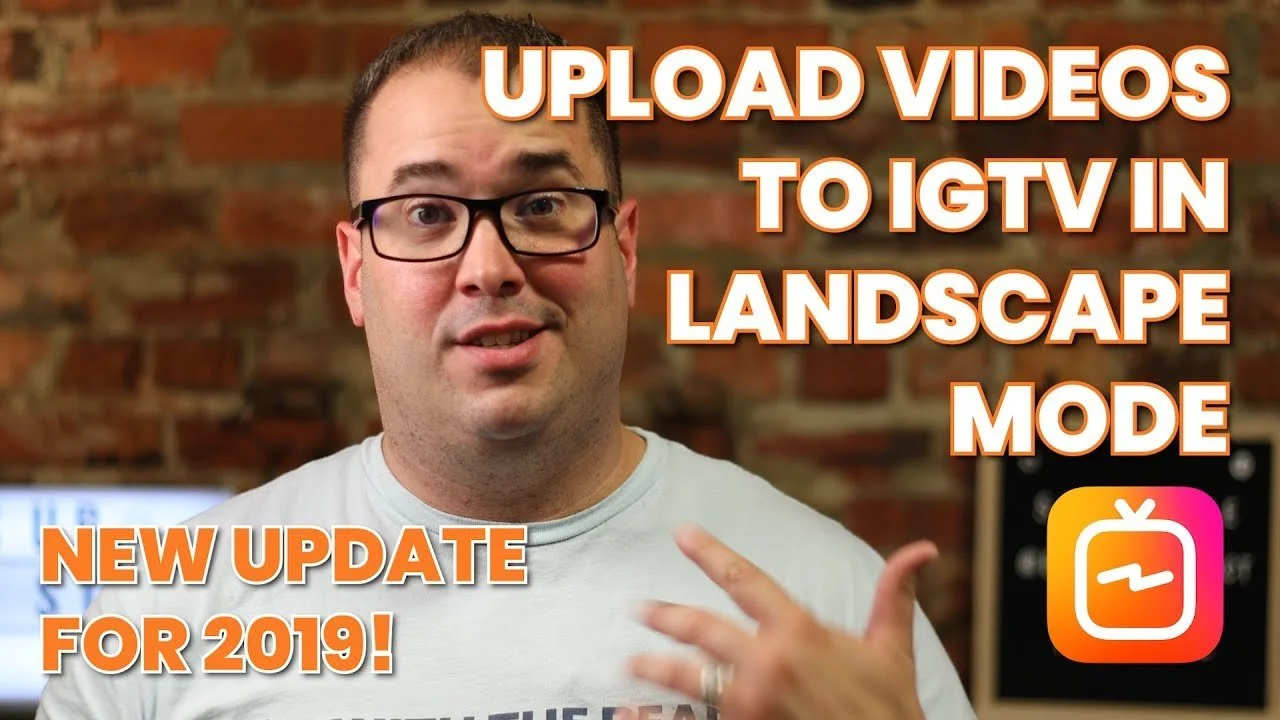
How To Upload IGTV Videos Widescreen Horizontal in 2019
On May 23rd Instagram announced that they are now supporting horizontal video for IGTV. Here’s the problem – when you upload a horizontal video to IGTV, still today, it automatically crops it for a vertical video.
On May 23rd Instagram announced that they are now supporting horizontal video for igtv
Here’s the problem – when you upload a horizontal video to IGTV, still today, it automatically crops it for a vertical video.
So how exactly do you upload a horizontal video to IGTV natively without having to do that weird move it sideways trick in your editing software.
First let's talk about why Instagram has to be so difficult with everything they do.
When I went to the IGTV app I went to uploaded a horizontal video and it still cropped it in the portrait mode. I said well maybe it was just for a preview, but it actually posted it that way! It was still in portrait crop.
But then I cracked the code. I figured out how to upload a video to IGTV horizontally without having to turn the whole video sideways.
This is how you upload a video horizontally natively to IGTV without any weird trick and I'll show you exactly how to do that looks just jump onto the computer.

Best Ways to Get Your Own Construction Leads (Updated 2020)
Business in today’s economy is a cutthroat and competitive landscape. While marketing and lead generations come and go, with some tactics employed by entrepreneurs ranging from laughable to downright outrageous, one thing is a certain fact: no business can survive without a steady stream of qualified construction leads flowing in daily.
The average consumer today is nothing like who they were just 10 years ago.
They want to feel connected with the brands they shop with.
This means they want you to share the same values, desires for the future and solving problems that mean something to their everyday well being.
This is the direction of marketing you need to be heading in if you want to gain qualified construction leads that understand and like what you do.
You don’t need to reinvent the wheel, but you need to reinvent your narrative as the world changes around you. This is perhaps why content marketing has become the focal point for millions of business owners.
Changing with the times means you have longevity, i.e. staying relevant in whatever kind of consumer climate you’re in.
Never forget those who have been loyal to you, and produce content that will show them how you have advanced and improved your services and products for them too.
Importance Of Lead Generation For Construction Businesses
Leads are the oxygen your business breathes.
As more and more people enter into the middle-class, the world will begin to see millions of micro and small business owners.
Without a constant stream of new customers such as these, you won’t stand a chance against the competition.
They want to see what kind of offices, warehouses, retail stores, high-rise buildings and event halls you are creating.
They want to see with their own eyes, what kind of materials, styles, designs and interiors you create from scratch.
But only if they click on your content, read your story and watch you at work, will you convert your leads.
Leads are the oxygen your business breathes.
Construction Lead Generation – The Correct Approach
Say it with me now, “content is king”. This is a term that was used sort of a funny joke in the early 2000s. But sweet heaven above! Now it's like a battle cry or a mantra you must chant in your sleep every night! Well, okay, perhaps not that serious. However, you have to realize that consumers are no longer falling for clickbait, what they want is emotional marketing. They want to feel as if the products and services they use, matter in their lives; more than just pleasure, they want to feel a part of the growing world.
Let’s Have A Look At The Best Ways To Generate Construction Leads:
Blog Posts
Business blogs have become part of consumers’ daily lives.
They read them as frequently as you used to with a newspaper.
This means that the average customer who knows who you are will read your blog posts once a week at least. This could be at home just browsing before sitting down for dinner, it could be on the train heading into work or even as a dedicated read because you’ve just released some jaw-dropping news.
The best part of blogs is, they drive completely organic traffic to your website and can be from SERPs and social media.
On the other hand, you have new consumers who are not quite sure what you do. They should be seen as a juicy lamb to a wolf.
All they want to know is, how on earth will your products and services make their lives better?
If you’re wondering how to get construction leads, write fun posts about how your products have been used in the past, what your desires are for the future
For example, how people will use your products and services and how you intend to design them in the future.
Be honest, talk about the troubles you’re having when making or improving products. Consumers are very understanding and just like a rambunctious puppy, they wag their tail when you show them more about things that are normally ‘behind-the-scenes’.
Helpful Videos
Video content is by far the most popular of all the contents. Why? Well, it's kind of like audiobooks, why read something when it can speak to you?
This is why you need to have videos on your landing pages and homepage, to show customers exactly what you do.
On your services page, you need to have short videos, preferably around 1 minute or so, that show what it is you do.
Cover the process from start to finish
How do you plan things
How do you design things
How do you then set about achieving them, etc.
YouTube is the obvious platform where you should be uploading but also, using your 5-second to 15-second ads to drive leads from the traffic. Post your video content on your social media pages and watch direct messages from your accounts come rushing in.
Podcasting
One of the most underrated techniques for how to get construction leads. Podcasting shares the same value as blogs.
Everyone thought they were going away and that they were just a fad from the 90s. Wrong!
Now, a podcast is one of the best ways to become an industry authority. People listen to podcasts to chill out, listen on the way to work or just while they’re doing their laundry and ironing.
They are, however, nice relaxing places where you build a rapport with your customers by talking about fascinating insider-details about the industry you work in.
You should bring guests on to talk about their experiences in the same field you work in and have a genuinely interesting conversation.
It also gives you a chance to inject your personality into the content, which consumers love!
Photography
Photos are used even to this day but they have to be high-quality. With commercial photography, you’re trying to showcase your products in great detail, from all angles and show the customer what they would be getting. It also gives them a chance to see the dimensions, colors and style of what you produce. Higher quality images are shared more often on Instagram, than low-quality blurry embarrassments.
Remember, content is king. Don’t be afraid to be quirky, show your personality, talk honestly about the troubles and challenges you face in your business, but also, inspire your customers to be hopeful about the future with great blog, podcast and video content.